
Living with Prostate Cancer
If feasible, choose a doctor specializing not just in cancer but also in the specifics of your form of prostate cancer. For example, if you’ve just been diagnosed with prostate cancer, talk to your diagnosing doctor first. They may be an expert in the subject or recommend you to someone else.
Other things to think about while choosing a doctor are: 
- Does your health insurance cover the treatment?
- Are the doctors analytical?
- Are they compassionate?
- Does their bedside manner align with their personality?
- Do they seem eager to include you as an active participant in this process?
Don’t hesitate to obtain a second or even third opinion. Be cautious of random advice, such as “surgery is the best option,” “radiation is the way to go,” or “take this herb, and your cancer will be healed.” Instead, rely on data from credible sources and the information your doctor recommends for the most up-to-date guidance.
Once you’ve made a decision, trust is essential. However, continue to advocate for yourself by asking questions, doing research, and staying engaged in your own care.
Detect it, Treat it, Defeat it!

Early Warning Signs of Prostate Cancer
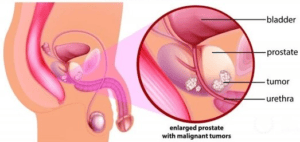
The World Health Organization has stated that prostate cancer is one of the deadliest health issues for men. The symptoms and signs of prostate cancer can vary, starting with a few minor indicators and potentially progressing into more serious issues, making it challenging to diagnose. This is why it is crucial to recognize and address these problems promptly. Both cancer and an enlarged prostate can cause similar symptoms, so understanding the differences is essential. Unfortunately, symptoms of prostate cancer often do not appear until the disease has advanced. While regular screenings are the best way to detect it early, some red flags indicate it’s time to see a doctor.
A few symptoms may indicate prostate issues, whether benign or malignant. To be safe, inform your doctor if you experience any of the following:
– **Urination issues**: A weak urine stream, difficulty starting urination, or a frequent urge to urinate—especially at night—can signal an enlarged prostate due to benign prostatic hyperplasia (BPH) or cancer.
– **Blood in your urine**: This could point to a urinary tract infection, but it is essential to have it checked out.
– **Pain or discomfort**: Experiencing pain while urinating or sitting may also be a sign of an infection, so it’s advisable to consult your doctor. Additionally, pain in your back, chest, or hips could indicate that the cancer has advanced and spread to the bones.
– **Erectile dysfunction**: While some men naturally experience this issue as they age, prostate cancer can also interfere with their ability to achieve an erection.
– **Painful ejaculation**: Other warning signs include painful ejaculation, a decrease in semen production during ejaculation, and the presence of blood in your semen.
In the late stages of prostate cancer, symptoms may include bone pain, weight loss, and persistent back pain, in addition to urinary issues. These symptoms can be pretty general and may reflect different health problems, which is why a proper medical evaluation is essential.
Genetics/Genomics Screening
Up to age 76, prostate-specific antigen (PSA) screening was associated with a lower all-cause mortality rate, except for men with cognitive dysfunction. Categories of genetically based biomarkers include common germline single-nucleotide polymorphisms, rare germline genetic mutations (e.g., BRCA1/2, HOXB13), and somatic (tumor) gene expression panels (e.g., Oncotype Dx®, Decipher®). In PC risk assessment, a polygenic risk score incorporating 269 PC risk single-nucleotide polymorphisms is more accurate than family history for assessing PC risk, as recommended by the National Comprehensive Cancer Network® guidelines. Most single-nucleotide polymorphisms work across races, and 50% of aggressive tumors occur in men in the top 20th percentile of the polygenic risk score. A study reported that a polygenic risk score is associated with conversion from active surveillance (AS) to treatment. Rare, highly penetrant germline variants (e.g., BRCA2, ATM) are also associated with risk. Together, the familiar and rare variants lead to more precise estimates of the lifetime risk of PC. Plasma cell-free DNA may become essential for managing patients with advanced PC, as it is prognostic for overall survival, helps select therapy, and predicts treatment response. It may be more helpful than repeated biopsies.
Health Disparities
Outside the equal-access Veterans Administration (VA) system, Black men were more likely to present with metastatic disease. They had correspondingly higher PC mortality rates, but the VA system did not observe these differences. However, VA studies of men who were potential candidates for AS reported that Black patients were more likely to have an intermediate-risk disease, less likely to receive conservative management, and more likely to receive definitive therapy within five years. Most of the racial disparities appear to be due to sociodemographic factors. Among those managed with AS, Black men were reported to have more frequent disease reclassification, progression, and definitive treatment, but not more metastasis or higher PC-specific mortality. A multi-institutional AS study outside the VA system found no association of race with conversion to treatment. Thus, AS appears comparably safe for Black and White men. PSA velocity was reported to be associated with Gleason-grade progression and metastases, but the thresholds were lower for Black men.
Biopsy
Transperineal prostate biopsy is being increasingly adopted (in a third of urologists recently polled) to reduce the risk of sepsis (even without antibiotics) and, with fusion guidance, to provide an improved sampling of the apical and anterior regions of the prostate. The challenges of transperineal biopsy are patient comfort, the need for a template, increased time, overhead, and difficulties with insurance coverage. In addition, a transperineal biopsy involves a substantial learning curve for where and how to achieve local anesthesia, which takes practice and experience. Currently, about half are performed under intravenous sedation.
Lymph Node Metastases
Several studies failed to find clear benefits from extended pelvic lymph node dissection, while others demonstrated a benefit when combined with radiotherapy for involved pelvic nodes (see Radiotherapy section below). With the emergence of prostate-specific membrane antigen (PSMA) positron emission tomography (PET) imaging, the management of nodal metastases may become increasingly important.
Imaging
Magnetic Resonance Imaging (MRI): MRI improves the accuracy of PC diagnosis but does not identify which men need treatment. Serial prostate MRI alone in patients on AS is not sufficiently accurate to rule out or rule in tumor reclassification or progression. Biparametric MRI protocols are quicker, less expensive, and more precise than those using ultrasound alone or ultrasound plus PSA. A study of men who never had a biopsy compared standard systematic ultrasound with MRI-targeted biopsy, taking only 2–3 cores from the MRI region of concern, found that the targeted biopsy alone was non-inferior to systematic biopsies. Over a third of MRI patients avoided a biopsy, and there were 50% fewer low-grade diagnoses. Other studies have shown that adding systematic biopsies is of value and should remain part of the process. It is not uncommon to find significant cancers in the systemic cores, even in areas with a normal MRI appearance. MRI is not sufficiently accurate to replace surveillance biopsies, but it is helpful overall. Patients with high Prostate Imaging–Reporting and Data System (PI-RADS™) lesions and negative initial biopsies should undergo repeat MRI. If the high PI-RADS abnormalities persist, undergo a repeat biopsy (including peri-lesion biopsies), as nearly two-thirds of these may reveal cancer. Positive target biopsies should be counted as only one positive core (i.e., the most extensively involved core).
PSMA PET: Because of their high sensitivity and specificity, the PSMA PET scans (gallium and fluorine) may significantly impact patient management. One study reported that half of patients with positive PSMA PET scans had a serum PSA level <0.2 ng/mL.26 The most accurate platform would include the PSMA PET with MRI (rather than computerized tomography), which increases the sensitivity for high-risk tumors.
Radiation Therapy
In the FLAME trial, men receiving higher doses of MRI-defined tumor nodules had a twofold reduction in biochemical failure and no additional toxicity. In the POP-RT study, treating pelvic lymph nodes improved biochemical control and distant-metastasis-free survival at the cost of a mild increase in late genitourinary toxicity. In the PROSINT trial, men receiving treatment in a single fraction or five fractions had similar biochemical outcomes and toxicity. In the postoperative setting, three randomized studies evaluated the role of adjuvant radiation in men with high-risk disease after prostatectomy. The largest of these (RADICALS) and a meta-analysis showed that early salvage therapy, when needed, did not compromise outcomes and spared a significant proportion of men from unnecessary treatment. The SAKK 09/10 study demonstrated that dose escalation from 64 to 70 Gy did not improve biochemical outcomes and was associated with increased toxicity. The EMPIRE-1 study suggested that fluciclovine PET improved biochemical outcomes when used to select men and plan postoperative radiation, compared with conventional imaging. In oligorecurrent regional lymph nodes, the GETUG07 study demonstrated ∼50% biochemical control at 3 years of follow-up with pelvic radiation and 6 months of hormonal therapy (ADT). In the setting of metastatic disease, a secondary analysis of the STAMPEDE trial suggested that survival is improved after prostate radiation, particularly in men with only lymph nodes or three or fewer bony metastases.
Advanced Disease
Men with locally advanced disease account for ∼15% of patients with newly diagnosed PC and have relatively poor cancer-specific mortality. In a prospective neo-adjuvant trial for patients with high-risk disease, either 6 months of ADT with apalutamide + abiraterone/prednisone + leuprolide vs. abiraterone/prednisone + leuprolide, adding the third agent didn’t make a difference. Still, there was a remarkable 20% complete response or minimal residual disease rate. A meta-analysis of neoadjuvant trials found that 60% of patients remained free of biochemical recurrence after 3 years. In patients who achieve a complete response/minimal residual disease, there is a significant difference in the recurrence rate (8% vs. 50%). Thus, a robust response to ADT is a good indicator of outcomes in the neoadjuvant setting. Oral relugolix is a luteinizing hormone-releasing hormone antagonist. A trial comparing relugolix and leuprolide showed that relugolix achieved superior testosterone suppression more quickly, with lower cardiovascular side effects. A meta-analysis also showed that cardiovascular events are more frequent with the luteinizing hormone-releasing hormone agonists than with the antagonists. However, the high cost of relugolix limits its adoption. Enzalutamide is superior to bicalutamide in Black patients, but bicalutamide can be safely used to prevent testosterone flare-ups in Black patients. For castrate-sensitive PC, abiraterone and apalutamide have the best survival outcomes, and these agents do not appear to cause cognitive decline. Zoledronic acid and denosumab are approved for preventing or delaying skeletal-related events. Zoledronic acid may compromise renal function, whereas denosumab may cause hypocalcemia. Osteonecrosis of the jaw occurs at approximately the same rate with both agents. Denosumab is far more expensive. These agents improve survival in patients with castrate-resistant disease and reduce the risk of skeletal-related events. They should be used in all patients with bone metastases who are castration-resistant.
In a study of olaparib (a PARP inhibitor used in patients with homologous recombination repair deficiency mutations such as BRCA1/2) vs. abiraterone/enzalutamide (crossover), among patients with 30% who had a pathogenic mutation, there was a significant improvement in overall survival, especially in those with BRCA mutations. Another study reported that cabazitaxel was beneficial for patients with mutations other than BRCA. In a trial comparing lutetium-177-PSMA-617 (a radioligand therapy targeting PSMA) with standard care using ADT in patients with PSMA highly expressed on their metastases, the lutetium arm showed a significant survival advantage. Unfortunately, this radioligand treatment is not yet approved by the U.S. Food and Drug Administration. Immunotherapy has been disappointing for PC. However, a study of nivolumab plus ipilimumab for metastatic castrate-resistant PC showed a 25% response rate in the pre-chemotherapy setting, with a better response rate in patients whose tumors had a high mutational burden.48 This regimen was quite toxic.
References:
William J. Catalona, MD; Douglas M. Dahl, MD; Stanley L. Liauw, MD; Stacy Loeb, MD, MSc, Ph.D. (hon); Robert B. Nadler, MD; Russell Z. Szmulewitz, MD
Perdana NR, Mochtar CA, Umbas R, Hamid AR. The Risk Factors of Prostate Cancer and Its Prevention: A Literature Review. Acta Med Indones. 2016